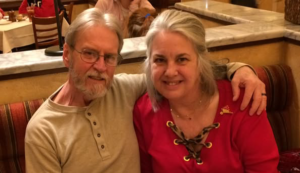
I don’t know exactly when frontotemporal dementia (FTD) entered our lives. Like air slipping beneath a door, it crept in unnoticed until, years later, we suddenly felt the cold draft, FTD…
Five years into our marriage, after a divorce, my mother moved in with us, and we formed a new family. Holidays, work travel, medical appointments, and birthdays came and went as the years passed.
My husband, Doug, was our household COO and chef; I was the CFO and gardener. Together, we cared for Mom. Then, in 2018, everything changed. Doug experienced what doctors believed was mild heatstroke. Later that year, Mom died after a long illness. Grief changed us both, Doug seemed different, but we kept moving forward.
When COVID-19 arrived in 2020, everyone sheltered at home, and inactivity became part of pandemic life. We went to appointments for the vaccine and booster shots, but along the way Doug lost interest in social activities and eventually could no longer manage household chores. His primary care doctors attributed the changes to aging and recommended marriage counseling.
Because Doug had no memory loss, his doctors did not recognize a form of dementia beyond Alzheimer’s disease. It took me several years to find a new physician. By then, Doug had significant weight loss, spoke in a very low voice, needed a rollator to walk, and had very little energy. His new doctor ordered every possible test, but when the results revealed nothing unusual, we began seeing specialists.
Neurology was our last stop. I will never forget the neurologist diagnosing Doug with Parkinson’s disease. He prescribed standard Parkinson’s medications and predicted that Doug would no longer need his walker by the next visit. Instead, Doug’s condition worsened, and he frequently experienced freezing of gait. I found a movement-disorder specialist at the leading hospital in our area, but the first available appointment was 18 months away.
On Father’s Day 2023, Doug had a low-grade fall that shattered his pelvis. Before being discharged from the hospital, he experienced tachycardia and suffered a small stroke. In the step-down unit, he had aspiration pneumonia and was placed on a dysphagia diet with swallowing-safety protocols. Doug returned home from rehabilitation in September, and I hired a home health aide for weekday mornings. Although he would never walk again, his swallowing improved. I bought a wheelchair-accessible van and took him to outpatient physical, occupational, and speech therapy sessions.
I enrolled Doug in a palliative care program in January 2024; the team was wonderful and added an extra layer of support. They helped address wound-care concerns and coordinated durable medical equipment and nebulized medications with his primary care physician.
In the spring, Doug’s long-awaited appointment finally arrived. The specialist diagnosed him with frontotemporal dementia and believed it had begun with the apparent heatstroke six years earlier. After an 18-month wait, the visit felt anticlimactic: there were no medication changes, no clinical trials, no additions to his therapy… “would you like to speak with a social worker?”
Gradually, he stopped speaking and stopped eating; I made him protein shakes. October 1st, he moved to Hospice care. Doug spent Columbus Day weekend with his family; I was by his side when he died on the 15th. He was 70 years old.
Please help raise awareness of frontotemporal dementia by asking, “What is FTD?” Encourage healthcare providers to recognize its early signs and distinguish FTD from other dementias, including Alzheimer’s disease.
#spotlightFTD, #endFTD